Coolant Flush & Replacement Service Near Smyrna, GA
Keep Your Engine Cool with Expert Care at Wade Ford Near Atlanta
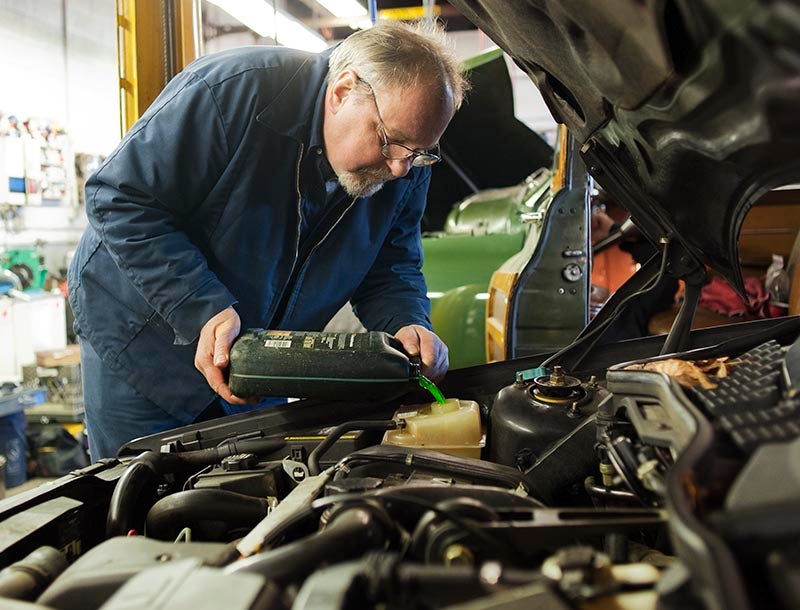 A coolant flush service is necessary because antifreeze gradually degrades over time, losing its corrosion inhibitors and allowing rust, scale, and organic debris to accumulate throughout the engine's cooling channels. Flushing forces out these trapped contaminants under pressure, clears internal radiator passages, and refills the system with fresh fluid to restore optimal heat transfer efficiency, protect internal metal components, and prevent catastrophic engine overheating.
Engine coolant does far more than keep fluid from freezing during cold spells. It absorbs extreme thermal energy from the cylinder head and engine block, transporting that heat to the radiator where air movement dissipates it. Modern engines rely heavily on light alloy components that require active chemical protection against oxidation, pitting, and electrolysis. Over thousands of miles, thermal cycling breaks down the protective chemical additives in antifreeze. Without periodic replacement, degraded coolant becomes acidic and begins eating away at radiator cores, heater cores, water pump impellers, and head gaskets.
Stop-and-go driving during hot weather puts immense stress on an automobile's thermal management system. When vehicles idle in dense traffic, reduced airflow through the front grille forces the cooling system to work harder to maintain safe operating temperatures. Routine cooling system maintenance ensures that heat transfers efficiently even under heavy engine loads. Drivers looking to maintain peak vehicle reliability can visit our service center on South Cobb Drive or speak with our team by giving us a call at 866-847-5880.
What is the difference between a coolant flush and a basic drain and fill?
A coolant flush uses specialized equipment to pressure-circulate fresh fluid and a chemical cleaning agent through the entire cooling system, completely replacing old fluid and removing trapped scale. In contrast, a basic drain and fill relies on gravity to empty only the radiator, leaving up to half of the old, contaminated coolant trapped inside the engine block and heater core.
| Maintenance Aspect | Basic Drain and Fill | Complete Coolant Flush |
|---|---|---|
| Fluid Exchange Volume | Approximately 50% to 60% of total capacity | 100% full fluid exchange |
| System Cleaning | No internal cleaning agent used | Chemical flushing agent removes scale and sludge |
| Pressure Testing | Standard visual drain inspection | System pressure-tested for internal and external leaks |
| Contaminant Removal | Clears loose sediment from radiator bottom only | Flushes trapped debris from engine block and heater core |
During a basic drain and fill, a technician opens the radiator petcock to let gravity empty whatever fluid flows out freely. While this introduces some fresh antifreeze into the radiator, it leaves several quarts of old, oxidized fluid sitting inside the cylinder block passages and cabin heater core. When new coolant mixes with this remaining contaminated fluid, the fresh corrosion inhibitors instantly dilute, reducing the service life of the fresh antifreeze.
Our service technicians frequently notice that vehicle owners assume draining the radiator removes all old coolant, when in reality substantial volume remains trapped behind the engine thermostat and internal passages. A professional coolant flush connects dedicated fluid-exchange equipment directly to the cooling lines. This machinery actively pushes clean fluid through every part of the system while removing old fluid, rust flakes, and degraded chemical deposits.
What does a complete coolant flush service include and what signs indicate you need one?
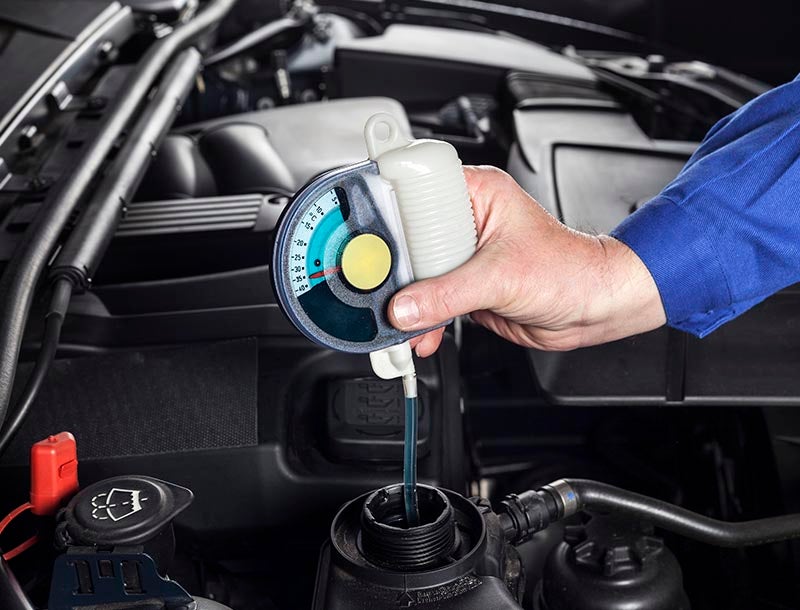 A complete coolant flush service includes a system pressure test, draining old fluid, flushing chemical cleaners through the engine block and radiator, refilling with manufacturer-specified antifreeze, and purging trapped air pockets. Key warning signs that a vehicle needs this service include an elevated temperature gauge, a sweet maple-like odor inside the cabin, brown or cloudy reservoir fluid, or a malfunctioning heater.
When you schedule comprehensive automotive maintenance services, factory-trained technicians follow a thorough process to restore your cooling system's health:
- System Inspection and Pressure Test: Technicians inspect radiator hoses, clamps, the expansion tank, and the water pump seal before applying pressure to verify system integrity.
- System Evacuation and Chemical Cleanse: Old fluid is extracted and a specialized cleaning formula is circulated through the engine block and heater core to dislodge rust and mineral scale.
- Complete Fluid Exchange: Fresh, vehicle-specific antifreeze is pumped in under pressure until all spent fluid and cleaning solution are removed.
- Air Purging and Final Check: The cooling loop is bled to eliminate air pockets that create hot spots, followed by a final operating temperature verification.
Recognizing the warning signs of degraded coolant early prevents costly mechanical breakdowns:
- Elevated Operating Temperatures: A temperature needle creeping higher than normal during routine driving signals restricted fluid flow or reduced heat transfer capability.
- Discolored Fluid: Healthy coolant appears vibrant green, orange, yellow, pink, or blue, and remains clear. Fluid that looks dark, cloudy, or rusty indicates heavy oxidation.
- Cabin Heating Failures: Lack of warm air from the interior vents often points to sludge blocking the small passages inside the heater core.
- Sweet Odor: A distinct sweet smell inside or around the vehicle suggests a small coolant leak evaporating on hot engine surfaces.
What factors influence the cost, recommended intervals, and fluid choices for a radiator flush?
Radiator flush costs are primarily influenced by fluid capacity, specialized OEM chemical formulation requirements, and local labor time needed to pressure-test and purge the system. Maintenance intervals vary significantly based on coolant chemistry, ranging from 30,000 miles or 2 years for traditional Inorganic Additive Technology ( IAT) to 150,000 miles or 5 years for Organic Acid Technology ( OAT).
Automotive manufacturers specify distinct coolant chemistries designed for the exact metallurgy and seal materials used in their engines:
- Inorganic Additive Technology (IAT): Contains fast-acting silicates and phosphates ideal for older iron-block engines, requiring shorter replacement cycles around 30,000 miles or 2 years.
- Organic Acid Technology (OAT): Employs organic acids without silicates to provide extended corrosion protection for aluminum components, lasting up to 150,000 miles or 5 years.
- Hybrid Organic Acid Technology (HOAT): Combines organic acids with a small amount of silicates or phosphates to deliver robust protection for modern aluminum cylinder heads and multi-metal cooling loops.
Mixing different coolant chemical formulations can cause severe chemical reactions. When incompatible fluids combine, their additive packages can precipitate out of solution, forming a thick gel that clogs narrow radiator tubes, destroys water pump impellers, and leads to rapid engine overheating. Service pricing reflects the volume and precise chemical specification of fresh fluid required, as well as the diagnostic labor needed to inspect thermostat operation, radiator cap pressure ratings, and hose condition during the procedure.
Common Questions About Cooling System Maintenance in Smyrna, GA
 Q: Can a faulty thermostat cause symptoms similar to dirty degraded coolant?
Yes, a faulty thermostat causes symptoms that closely mirror degraded coolant, including rapid engine overheating or an erratic dashboard temperature gauge. When an internal thermostat sticks in a closed position, it physically blocks antifreeze from circulating to the radiator, preventing heat dissipation regardless of how clean the fluid is. Technicians perform a complete diagnostic inspection to determine whether temperature spikes stem from a mechanical thermostat failure or restricted internal flow caused by corrosion deposits.
Q: What happens if scheduled coolant flushes are repeatedly skipped?
Skipping scheduled flushes allows protective corrosion inhibitors to break down completely, causing antifreeze to turn acidic over time. This acidic environment corrodes metal water jackets, wears down internal pump seals, and deposits mineral scale along radiator walls. Over time, neglected cooling systems suffer from pinhole radiator leaks, clogged heater cores, blowing head gaskets, and warped engine components that require extensive mechanical overhaul.
Q: Why is a specialized flushing solution necessary instead of using plain water?
Plain water lacks the chemical properties needed to dissolve hardened scale, oil film, and rust deposits that stick to internal engine passages. Dedicated flushing solutions break down these stubborn mineral accumulations without harming rubber hoses, plastic tanks, or aluminum castings. Furthermore, plain water promotes rapid metal oxidation and lacks the boil-over protection and freezing resistance provided by fresh, pre-mixed antifreeze.
Q: How can you tell if engine coolant needs changing before the manual interval?
You can determine if coolant needs changing early by inspecting its visual clarity, color, and odor. Healthy fluid is transparent and brightly colored, whereas degraded fluid turns dark, muddy, or brown, and may carry a burnt odor. Service advisors can also test fluid acidity and reserve alkalinity using chemical test strips or a refractometer to verify whether corrosion inhibitors remain active.
Q: Are there local maintenance incentives or special service savings available?
Service specials and maintenance offers update periodically throughout the year to help drivers maintain critical vehicle systems affordably. Eligible community members can also review details regarding our first responders program or speak directly with our service team. To inquire about current service offers or schedule your next fluid inspection, stop by our local Smyrna dealership or give our staff a quick phone call today.
Protecting Your Engine with Professional Cooling System Care
Maintaining fresh, high-quality coolant is one of the most effective ways to preserve your vehicle's engine life and prevent unexpected thermal damage. Routine pressure testing, fluid evaluation, and timely flushing remove harmful contaminants before they compromise water pumps, radiators, or cylinder head gaskets. Staying ahead of factory maintenance intervals keeps your vehicle operating smoothly through every seasonal temperature shift and high-traffic drive.
Our factory-trained service team at Wade Ford is dedicated to keeping your vehicle running reliably with certified care, genuine fluid formulations, and thorough diagnostic inspections. Whether your temperature gauge is rising or your vehicle is due for its periodic maintenance check, scheduling your service visit online takes only a few moments so you can keep your vehicle performing at its best.
Fill out the form below and we'll contact you shortly.
